Our Phishing and Social Engineering Assessments help organisations measure employee resilience, improve security awareness, and stop attackers from exploiting human vulnerabilities.
Security breaches can begin with attackers targeting people rather than systems. Phishing emails, impersonation attempts, or deceptive communication let attackers obtain credentials, bypass security controls, and access sensitive systems.
By simulating realistic social engineering scenarios in a controlled and authorised manner, our Phishing and Social Engineering Assessments help organisations identify weaknesses before attackers can exploit them.
What we offer
Choose our Phishing and Social Engineering Assessment to improve awareness and test real-world attack scenarios. This will help your organisation significantly reduce the risk of compromise.
The methodology
Employees are often the first line of defence against cyber-attacks. This is because many organisations invest heavily in security technologies, like firewalls, endpoint protection, and monitoring tools. However, attackers frequently bypass these controls by targeting employees directly.
Phishing and Social Engineering Assessments check your organisation’s resilience against human-focused attack techniques.
The outcome
These assessments provide practical insights that strengthen employee awareness, improve detection capabilities, and reduce the likelihood of successful phishing or impersonation attacks.
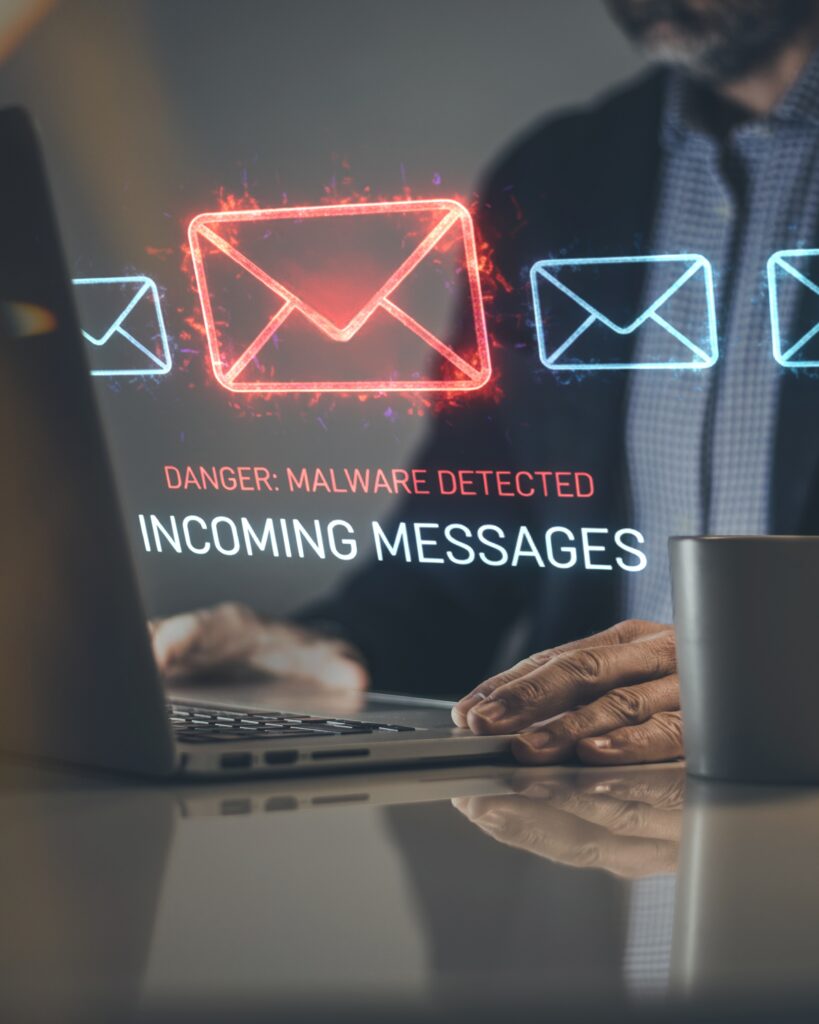
A single compromised account can provide attackers with access to internal systems, email accounts, cloud platforms, and sensitive business data.
What you receive
Our Phishing and Social Engineering Assessments are carefully planned. We want to ensure realistic testing while protecting employees and maintaining organisational trust.
We provide actionable recommendations to strengthen awareness training, detection capabilities, and internal processes.
Deliverables include:
Summary highlighting overall employee susceptibility
Campaign results and metrics
Analysis of user behaviour and response patterns
Identify high-risk departments or roles
Recommendations for improving awareness training and processes
Guidance for strengthening phishing detection and response procedures
industries
Who we’ve helped
Our Adversary Simulation evaluates your enterprise environment comprehensively.
Finance and Banking
Government and Public Sector
Healthcare and Pharmaceuticals
Transportation and Logistics
Retail and E-commerce
Education and Universities
Manufacturing and Industrial
IT and Software as a Service (Saas) Platforms
What we assess
Our assessments simulate common attacker techniques in a controlled and ethical manner.
We simulate realistic phishing campaigns designed to test employee susceptibility to phishing emails and credential harvesting attempts, and their ability to identify suspicious links or attachments and to report suspicious emails to security teams.
Attackers often create convincing login pages that mimic corporate systems or SaaS platforms. We assess whether users enter credentials into fraudulent pages, effectiveness of MFA protections, and detection of suspicious login activity.
Business Email Compromise attacks target employees responsible for financial or operational tasks. We simulate scenarios such as fake payment requests and vendor communications, executive impersonation emails, and urgent financial transfer requests.
Attackers frequently impersonate to manipulate individuals into providing access.We assess employee responses to requests for sensitive information, attempts to bypass authentication procedures, and suspicious requests for system access.
An important aspect of social engineering defence is how employees respond to suspicious activity. We evaluate whether employees report suspicious emails, response times to potential phishing attempts, effectiveness of internal reporting processes, and security awareness levels across departments.
What frameworks we follow
Our Phishing and Social Engineering Assessments align with recognised cybersecurity frameworks and best practices, including:
MITRE ATT&CK
ISO/IEC 27001
NIST Cybersecurity Framework
CIS Controls
ASD Essential Eight
These frameworks guide our approach to evaluating organisational resilience against social engineering attacks.
FAQ
Find answers to common questions about our services and what to expect from your experience with us.
Will employees know they are part of a phishing simulation?
This depends on organisational preference. Some organisations inform employees in advance as part of awareness programs, while others conduct controlled simulations without prior notice.
Are employees penalised if they click on phishing emails?
No. The purpose of phishing simulations is to improve awareness and identify training opportunities, not to penalise individuals.
What metrics are measured during phishing simulations?
Typical metrics include email open rates, link clicks, credential submissions, and whether suspicious emails are reported.
How often should phishing assessments be conducted?
Many organisations run phishing simulations periodically to continuously measure and improve employee awareness.

Let’s work together
Want help to measure employee resilience, improve security awareness, and stop attackers from exploiting human vulnerabilities?
You’re in the right place.